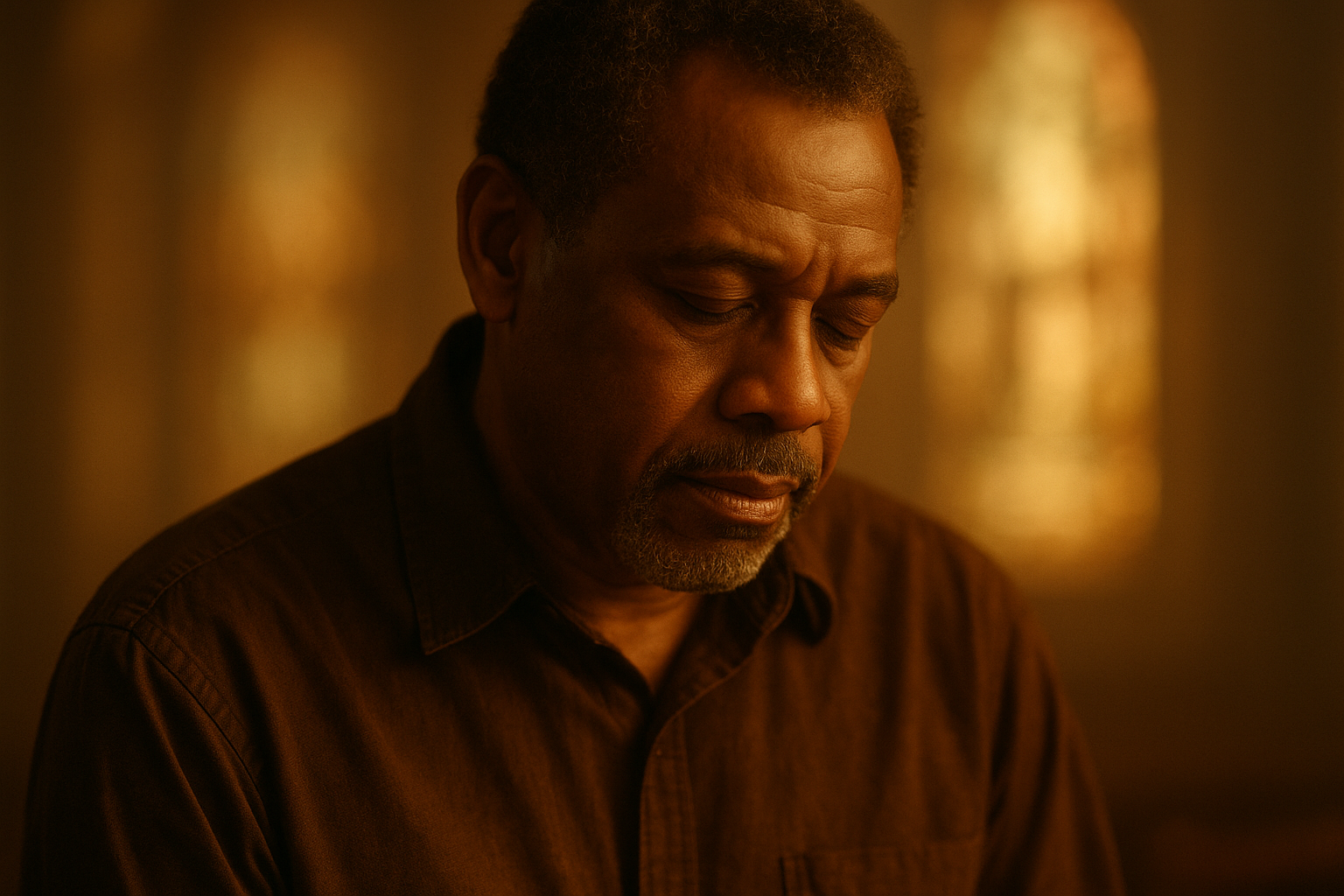
Independent Gospel in 2026 is quietly fracturing its own traditions — not out of disrespect, but out of necessity. The genre's most compelling new voices are stripping the choir arrangements down to something more exposed, more interior, trading the grandeur of the sanctuary for the intimacy of a single human breath held too long. Gerard Powell occupies that particular tension with an instinctive ease.
Working from an undisclosed location, Powell keeps biographical detail deliberately thin, letting the music carry the context. His sonic vocabulary leans into the foundational grammar of Gospel — call-and-response structure, the upward melodic reach that signals surrender, the rhythmic patience that allows a lyric to land with full weight — while something in the delivery feels less like performance and more like testimony. There is a restraint to his voice that refuses easy catharsis, which makes the moments where he opens up feel genuinely earned.
Both tracks currently on his KickMusicStarter page map different coordinates of the same spiritual terrain. Let's All Sing functions as an invitation rather than a declaration, its communal premise laced with an undercurrent of longing — as if the gathering it describes is still just out of reach. In the Spirit moves differently, more inward, the structure loosening as the song progresses in a way that feels less like arrangement and more like surrender. Taken together, the two pieces suggest an artist interested in the space between faith and searching, rather than the triumphant resolution Gospel often rushes toward.
The Gospel category on KickMusicStarter is small but it is not uniform, and Powell stands apart through that quality of restraint. The broader 2026 independent Gospel scene is absorbing influences — ambient production, lo-fi warmth, the kind of sparse digital minimalism that has reshaped adjacent sacred music traditions — but the most durable work keeps the emotional core legible. Powell seems to understand this instinctively: the production serves the feeling, never substitutes for it.
There is a particular kind of listener that this music finds — not necessarily the churchgoer, not necessarily the skeptic, but the person sitting somewhere in the middle of those two conditions, looking for language that holds ambiguity without abandoning conviction. That is a real and growing constituency in 2026, and Powell's two tracks speak directly into that silence.
Where Powell goes from here is genuinely open. The two tracks feel like early coordinates rather than a completed map, and the undisclosed geography only deepens that sense of unresolved potential. If the restraint holds and the emotional honesty scales, there is meaningful territory ahead — music that does not need to announce itself because it already knows what it is.