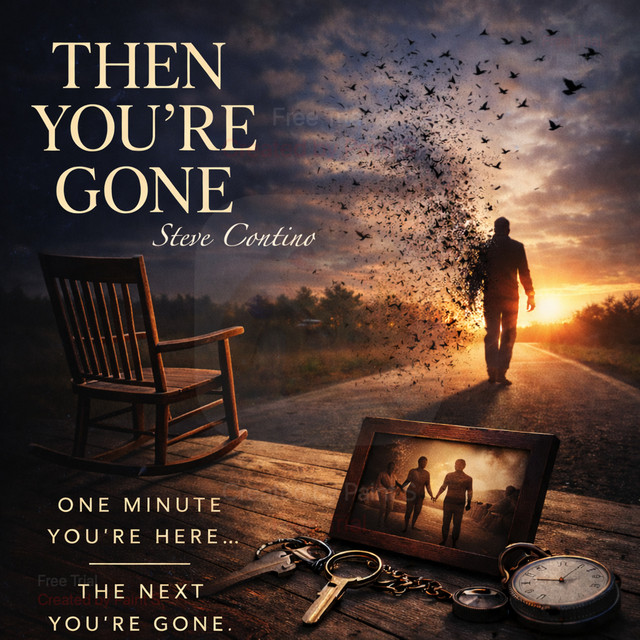
Pop in 2026 is drowning in its own polish. Streaming algorithms have trained a generation of independent artists to sand every edge until nothing catches, nothing snags. The result is a genre that often sounds like it was written by someone who has listened to a lot of pop music but never quite felt it. Against that backdrop, the work coming out under the Steve Contino name registers as something genuinely deliberate — songs built around emotional specificity rather than demographic calculation.
Contino operates from an undisclosed location, and there is something fitting about that remove. The music carries the quality of a writer working without an audience looking over their shoulder. The sonic vocabulary here is clean but not sterile — layered melodic structures, arrangements that breathe, vocals that stay in conversation with the production rather than fighting for dominance. What is most distinctive is restraint. Contino knows when a hook has done its job and does not push it past the moment.
In Her Arms establishes the emotional register early: intimacy rendered in careful detail, the kind of song that understands proximity as its own form of drama. My Gravity moves into more expansive territory, the title doing real conceptual work — desire as a physical force, inescapable and directional. When I Look In The Mirror turns inward, and the production reflects that, stripping back to let the lyric carry weight. Then You're Gone handles absence with more structural tension, the negative space in the arrangement doing as much work as what is present. Lakeshore Drive feels like the collection's most cinematic moment — geography as emotional memory, a song that earns its sense of scale.
The independent pop landscape in 2026 is broad enough to hold genuinely different approaches, and the KMS roster reflects that range. Where Gail Vogel works with mood and atmospheric drift, Contino is more committed to the song as a discrete emotional event — verse, hook, resolution, consequence. The genre is slowly recovering its nerve, moving away from the hyper-compressed, feature-ready template that dominated the early twenties and back toward writing that trusts the listener to stay for the full arc.
There is a particular cultural appetite right now for music that does not perform vulnerability but simply practices it. Contino's catalogue sits comfortably inside that moment — not because it chases a trend, but because the emotional territory the songs occupy has always been the territory pop was built to explore: love, loss, self-recognition, the physics of attachment. That this material is arriving from somewhere undisclosed, outside any obvious scene or city, only sharpens its sense of independence.
The body of work Contino has assembled on KickMusicStarter is the kind of foundation that rewards patience — both the artist's and the listener's. The next step is volume, not ambition; the ambition is already legible. More songs, more room to move, and a voice that has clearly not yet said everything it has to say.