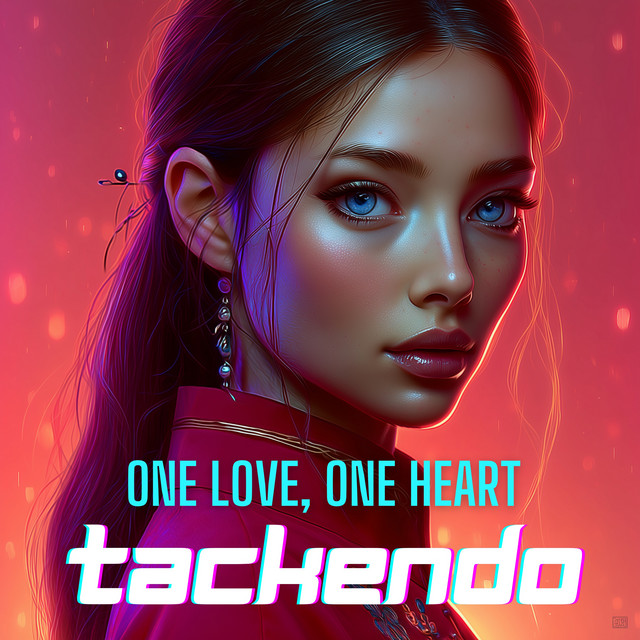
Independent Electro in 2026 has a geography problem — or rather, it has solved one. The genre that once lived and died by the latitude of its city, by whether you were pressed against a Detroit warehouse wall or filtering through a Berlin U-Bahn platform, has become increasingly unmoored from place. That dislocation is no longer a weakness. For artists building in isolation, it has become a compositional tool in itself.
Tackendo operates from an undisclosed location, and that anonymity is not a marketing gesture — it reads as a structural choice that shapes the music. The sonic vocabulary here is rooted in hard-edged Electro fundamentals: rigid sequencer patterns, bass frequencies that sit low and insistent, drum machine articulation that owes something to the Roland lineage without leaning on nostalgia. What distinguishes Tackendo's approach is a certain emotional tension held inside tight, almost austere arrangements — a restraint that makes the moments of release land harder.
On One Love, One Heart, that tension finds its clearest expression. The track carries a deceptively warm title into cooler sonic territory — the harmonic content suggests longing, but the rhythmic architecture keeps sentiment at arm's length, processing feeling through machinery rather than surrendering to it. The texture is layered but deliberate, each element earning its presence in the mix. There is a discipline at work that resists the maximalism creeping into a lot of contemporary Electro, and the emotional register benefits from that restraint: it feels earned rather than performed.
Situating Tackendo within the current KMS Electro landscape, the comparison that keeps surfacing is 2197 — another artist on the roster whose work navigates the intersection of futurist aesthetics and genuine compositional rigour. In 2026, the genre is splitting along a quiet fault line: on one side, producers leaning into hyper-saturated, visual-media-adjacent sound design; on the other, a quieter contingent digging back into the foundational logic of Electro, trusting the grid, trusting the low end, letting structure carry the weight that spectacle usually would. Tackendo sits clearly in the second camp.
There is something culturally legible about music that refuses to announce its coordinates. At a moment when identity is both more fluid and more surveilled than at any point in recent memory, the choice to keep origin undisclosed — and to let the work absorb that ambiguity — resonates beyond scene politics. The music becomes a kind of open signal: traceable to nothing specific, available to anyone with a receiver.
Where Tackendo goes from here is an open question, and that openness is the most interesting thing about the project right now. The foundations are solid, the aesthetic logic is coherent, and One Love, One Heart suggests an artist who understands that Electro's power has always lived in what it withholds. The direction to watch is whether that restraint eventually gives way — and what comes through when it does.